Click here to sign up for our free daily newsletter
Extended Household Reduced to 10 People Total

An Extended Household of 10 People in Total

Nov 5, 2020 | 10:32 AM

Close families or groups of friends may form an extended household group, to a maximum of 10 people.

Please be aware: 1. Your families or friends must remain consistent. Do not visit different families or friends every day. 2. People in the same extended household group without high-risk individuals can be closer than two metres. 3. You should always know who you have been in contact with over the past two weeks. These are the people who would need to be contacted by public health if you were to test positive for COVID-19.

What is an Extended Household?

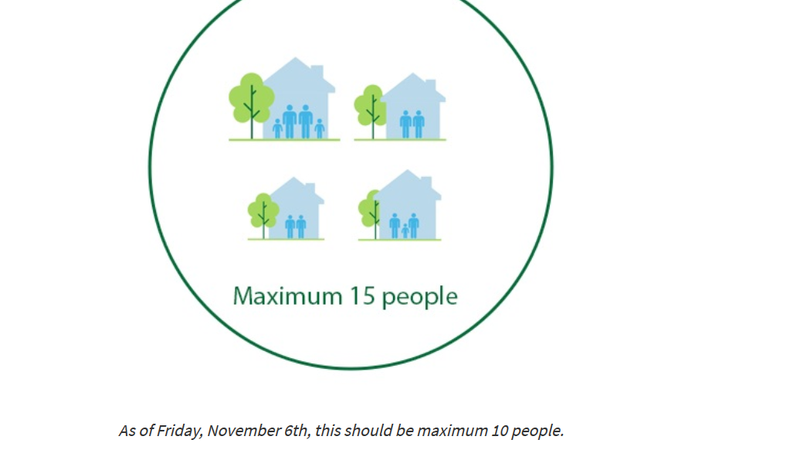
Your extended household is the people you can hug and touch, or those who can become part of your daily and weekly routines. This should be 15 people or fewer. As of Friday, November 6th, this should be 10 people or fewer.


It can include up to four groups of family or friends, but ideally it is only members of your direct household.

People in the same extended household without high-risk people can be closer than two metres.

Your extended household must remain consistent. Do not visit different families or friends every day.

REMEMBER: There is no way to completely remove risk of transmission when you’re gathering with people outside of your immediate household. It’s important to consider the health of your friends and loved ones, and postpone gatherings if you or someone in your extended household is not feeling well.

Tips on forming an Extended Household:

  • If you are going to create an extended household, consider if any member of the group has chronic health conditions that would put them at greater risk, or if they are in close contact with someone who could be vulnerable.
    • Older people or those with chronic illnesses are at higher risk for a more severe form of the disease.
  • Consider outside contacts of the people in your extended household – does it include children in school settings, school staff, essential employees, or vulnerable populations like seniors or those with underlying health conditions? Consider that all of your contacts are now their contacts, too. This may add additional risk of transmitting COVID-19 to your loved ones and friends.
  • Don’t hesitate to ask questions of the people you are considering forming an extended household with. This can include:
    • How many other families are you getting together with?
    • How often are you going out into public?
    • Do you always wear a mask when you’re in crowded places and/or when you can’t physically distance?

The following advice remains in place and should always be considered:

  • Stay home if you are sick.
  • Practise everyday preventive actions in the new normal, including:
    • Practising proper cough and sneezing etiquette (into a tissue or the bend of your elbow);
    • Washing your hands often with soap and water; if soap and water are not available, use an alcohol-based hand sanitizer;
  • Maintain a two-metre distance with people who are not in your extended household group.

As of Friday, November 6th, this should be maximum 10 people.