Click here to sign up for our free daily newsletter
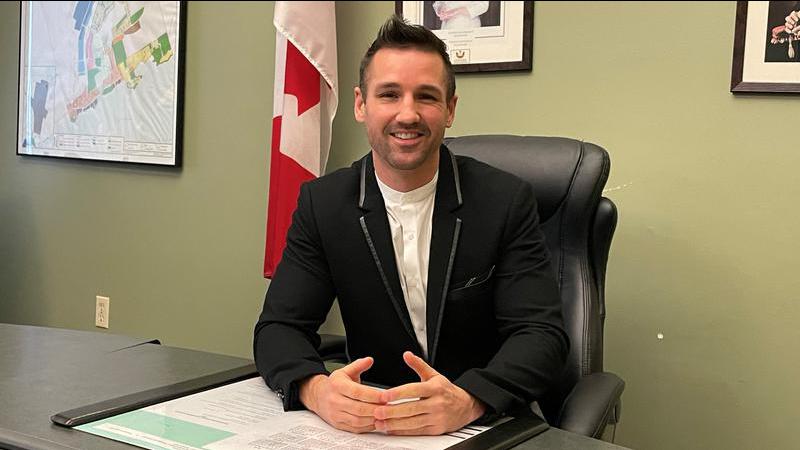
Mayor Colin Ratushniak also supports funds going towards Canada's Indigenous population. (Derek Cornet/larongeNOW Staff)
federal budget

La Ronge mayor approves of federal plan for billions of dollars going into affordable housing

Apr 8, 2022 | 2:08 PM

La Ronge Mayor Colin Ratushniak believes the federal government’s commitment to build 100,000 affordable new homes in the next five years is good news for the municipality.

“That’s fantastic news the federal government has announced that because I think that’s one of the biggest issues Canadians are facing, not only in Saskatchewan, but across the nation,” he said. “It’s really good news, especially with the super high cost of construction materials as well.”

The federal government released the 2022-23 budget on Thursday, which included heavy spending to increase home affordability. The plan to build 100,000 homes will cost $4 billion and another $1.5 billion has been set aside to build 6,000 new units over the next two years through the Rapid Housing Initiative.

The budget also introduced the First-Time Home Buyer Incentive, which allows eligible first-time home buyers to lower their borrowing costs by sharing the cost of buying a home with the government. There is now a two-year ban on foreign investment in Canadian housing, as well as a new Tax-Free First Home Savings Account with a deposit limit set at $40,000.


“I think La Ronge has always been in this crisis and it is nice to see the federal government is stepping up,” Ratushniak said. “It’s not only just affordable housing, but affordable rental and just the availability for any accommodations for professionals or vulnerable people, people who are trying to move passed homelessness and our seniors as well.”

During the next seven years, the federal government also pledged to invest $6 billion to improve and expand housing for Indigenous Peoples. That includes $2.4 billion to be spent over five years on on-reserve housing, $845 million over seven years to support housing in Inuit communities and $190 million over seven years for Métis housing.

A further $250 million will be spent for ongoing searches at residential school sites and reconciliation efforts. Of that, $209 million is earmarked to document, locate, and memorialize burial sites at former residential schools, the construction of a new National Centre for Truth and Reconciliation, and to ensure disclosure of federal documents related to residential schools.

In the next three years, $25 million will fund the digitization of documents relating to residential schools. Another $10.4 million will go to Justice Canada to appoint a special interlocutor to improve federal laws to protect unmarked burial sites. The RCMP will receive $5 million to support community-led responses to unmarked burial sites over the next five years.

“It’s really great to see the federal government is really stepping up and really holding true to their promises and working towards the Calls to Action that have been put into place for our country,” Ratushniak said. “It is really nice to see, and I really hope the funds go to some really worthy causes so we can help ultimately rebuild those relationships with our Indigenous partners.”

The federal deficit for 2021-22 is $113.8 billion, down from $144.5 billion estimated in the last fiscal update. The deficit is expected to continue to fall to $52.8 billion in 2022-23 and to $8.4 billion by 2026-27. Canada’s national debt is approximately $1.1 trillion.

derek.cornet@pattisonmedia.com

Twitter: @saskjourno