Click here to sign up for our free daily newsletter
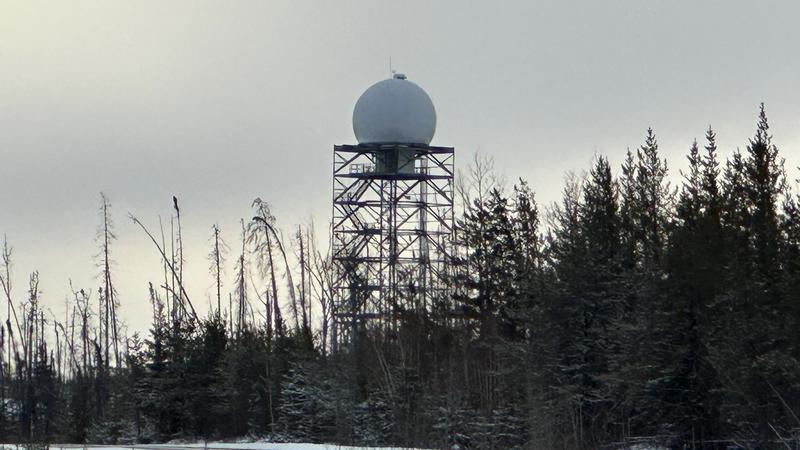
Environment and Climate Change Canada, as well as Nav Canada, operate weather stations near La Ronge. (Derek Cornet/larongeNOW Staff)
technology

Local weather stations providing valuable data for forecasting, aviation

Jan 16, 2024 | 4:19 PM

The Environment and Climate Change Canada (ECCC) weather station north of La Ronge continues to be a vital asset for local residents and others who travel through the region.

“Historically, the purpose of the weather station was to monitor the weather for aviation purposes – providing current conditions so that aviation forecasts could be made for the site for planes coming and going,” meteorologist Terri Lang wrote in an email to larongeNOW.

“But now, the weather station(s) provide a historical climate record for the area, as well as provide current conditions for many purposes: aviation, weather forecasting, boating, forest fire forecasting, etc.”

Throughout the years, there has been a few different weather stations located at La Ronge. Originally, it was in the early beginnings of Environment and Climate Change Canada that weather observing began back in 1959, but that was transferred over to Nav Canada in 2013 and they continue doing so to present day.


An automatic climate reference weather station was installed by ECCC in 1999 and continues to operate near La Ronge. The ECCC station serves as the reference site for weather records.

There is one other set of weather records for La Ronge that ran from 1921 to 1987, which only has temperature and precipitation, but there are gaps in the data. Lang is unsure who collected the records, but noted it was likely a volunteer.

“The ECCC sites records temperature, dew point (used to calculate humidity), precipitation (rain, melted snow), snow on the ground, wind speed (sustained and gust) and direction, and atmospheric pressure,” Lang wrote.

“The Nav Canada site provides these same elements, but also reports visibility, cloud amounts and cloud bases, and current weather if any (rain, snow, freezing rain, thunderstorm, smoke, fog, etc) – they do record rainfall amounts and sometimes, snowfall amounts and snow depth.”

Lang added communities benefit from having a weather station near their community for more accurate weather and aviation forecasts. She stated everyone benefits from having as many weather stations as possible that feed into the weather models that drive weather forecasting. Surface weather observations are only one component of weather models with other information coming from balloons, satellite information and radar.

“Other more northerly communities likely do not have as reliable weather forecasts if they lack a weather station and are outside of weather radar range, which most of northern Saskatchewan is,” Lang mentioned.

“Things like localized fog, low cloud and snow are difficult to pick up on weather satellites and even radar. It is hard to know how low the visibility is in smoke, even if smoke can be seen on the satellite photo.”

The hottest day ever recorded in La Ronge is 36.7 C set on July 2, 2021, and coldest is -48.3 C set on Jan. 5, 1973. There are warmer and colder temperatures that come from the volunteer records, but they are not included in the ECCC record because of the gaps in data.

derek.cornet@pattisonmedia.com