Click here to sign up for our free daily newsletter
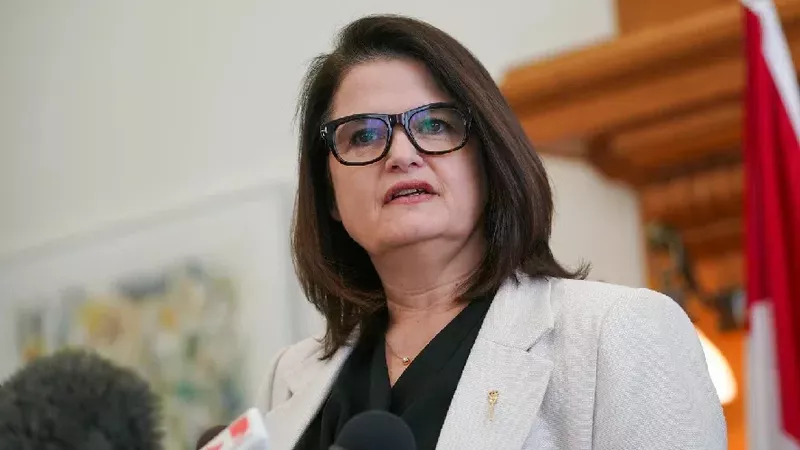
Saskatchewan NDP leader Carla Beck. (THE CANADIAN PRESS/File)
Provincial Politics

Q&A: Sask NDP leader Carla Beck sits down to discuss provincial concerns, including rent control and legislative absence

Dec 14, 2025 | 11:00 AM

Saskatchewan NDP leader Carla Beck was in Prince Albert on Friday as part of her promise to improve her footprint across the province.

Speaking with paNOW, she touched on a variety of different topics and answered some important and pressing questions.

Q: After last year’s election, you talked about working more in Prince Albert. What efforts have been made to win back voters here in the city?

A: I think it’s the same right across the province. Being out, listening to people, hearing about what their concerns are, showing that you’re willing to, as the official opposition, bring those concerns to the legislature, but also work with people in Prince Albert and communities right around this province to get forward or get to work starting to build those solutions I think that people are looking for. There’s a lot of reason, I think, for optimism in this province. There’s a heck of a lot of opportunity, and a lot of strength here. This is a province where people are resilient; they don’t sit back whining a lot about what’s wrong. They want to see solutions, they want to see progress, and that’s really the approach we’ve taken. Since the election, we haven’t missed a beat. We kept getting out to communities right across this province and with their input, we’ve been bringing forth not only the concerns, fulfilling our role as the official opposition, but also a number of private members’ bills to propose some of the changes that people are telling us that they want to see in this province.


Q: Lately, concerns have been about rent control. What do you say to people who claim that increasing rent will mean less investment in new rentals?

A: We’ve got a government right now that’s been in power for 18 years, and we have one of the worst records when it comes to building new housing in this province – something, really, that was upended when this government brought in the PST on construction labour, something that really halted construction in the province. This is a government that’s had a long time to figure out across the spectrum housing plan. That’s something that still needs to be worked on. But when it comes to rent control, there are a majority of provinces in this country that have rent control, and Saskatchewan ranks behind almost every one of those provinces when it comes to housing starts. We do know that there are 300,000 renters in this province and that they have faced 41 consecutive months of rent increases, that we have the highest rate of financial anxiety in the entire country, and that people are facing 20, 30, even 40 per cent rent increases. It’s pricing them out of their homes, it’s pricing them out of grocery stores, we’ve got record food bank usage, so something needs to be done. It’s not the only thing that needs to be done in housing, but it is something that all of those renters are telling us that they desperately need right now.

Q: What other issues are you hearing, not just here in Prince Albert, but also up north in Northern Saskatchewan?

A: The cost of living is a big one, the cost of groceries is another issue. We had healthcare meetings on the way up to P.A., [and] the number of people who are without a family doctor is a huge issue. People who are waiting for procedures, living in fear that their doctor might move or retire, which we’ve seen. The impact is not only on people who don’t have access to primary health care. We’ve seen a lot of hospital closures and a lot of program service closures in communities right across this province. That continues to be a big concern as well. It doesn’t feel like it on a day like today when it’s -30 outside, but we continue to hear a lot of concerns about what the plan is for next year when it comes to wildfires, something that impacted many communities in the north and here in P.A., where they opened their arms and welcomed so many evacuees over the course of the summer. We continue to hear a lot of fallout and a lot of concern, and a lot of frustration from people who are worried that the lessons weren’t learned from this past wildfire season. So that’s why we’ve been bringing forth, again, another private member’s bill to make sure we are ready for next year.

Q: Speaking of the north, what are your thoughts on all the mining work happening up north and the expansion of the Port of Churchill?

A: As I said, there’s an incredible amount of opportunity in this province. I think it’s exciting to see some of that mining, that potential that’s been right on the cusp, start to take off. I think this is also the time to be looking at the infrastructure that we need to get that product to market. In the south, we’ve got plans for up to nine million tons of additional potash to get to market. We need to make sure that we have the rail infrastructure there, that we have port access, and the efficiency of those systems to not only do what we do best here in this province, what we mine and grow and manufacture, but also to ensure that we’re making the investments in the infrastructure to be able to get that to market.

Q: How do you balance economy with environment?

A: When we look at what we mine and grow and produce here in this province, when you look at the world stage, we do generate those exports in a relatively sustainable way, but we always have to be looking to the future: making investments in our power grid, making sure we’ve got the right mix and that we’re making the investments that are needed. Working with local communities to ensure that we are not only mining and producing things in a sustainable way, but that communities are getting the full benefit. I think that’s something right now that we’re not necessarily seeing in this province. There’s an incredible amount of resources that are generated in this province, but too many people that are falling behind. I want to see all people in this province benefit when we are mining and extracting those natural resources, so that our communities are getting full benefit and that we’re looking long-term to ensure that that’s sustainable and that people will be set up to have a good life here in Saskatchewan for a long time.

Q: Turning to the legislative side of things, Premier Scott Moe recently said that you were in the house for just 9 out of 25 days during the fall sitting. Do you have any response to that?

A: I did send the Premier a text and I said, ‘Hey, I heard you missed me.’ This past week, I had the flu, which I would say as I said then, no one wants to get. So if you’re feeling sick, stay home. But outside of that last week, at the start of the session, I said that I would be in the house about half the time, and the rest of the time I was going to be out talking with people around the province. And that’s exactly what we did. We were out at [the Saskatchewan Association of Rural Municipalities], and we were out around the province, talking with Saskatchewan people. And frankly, I was getting better answers than I was getting in the legislature. Don’t worry, we’ve got a big team in [the Legislature] that has been holding this government’s feet to the fire. But as the leader, again, I think my time is well served, being out in communities, meeting with community leaders and businesses and people on the front lines and starting to build that alternative that more and more people are looking for in the province. I will give you a little bit of a heads up for the spring session that I will be out of the house a lot in the spring session as well. There’s a lot of work to do, a lot of people to talk to in this province, and I’m going to continue to do that work. The Premier can continue to stand and give non-answers, while I’m going to go listen to the experts out in communities around this province.

Q: The Saskatchewan NDP issued an email on Friday highlighting separation talks and how this is a time where we need to be united. Could you elaborate on that?

A: We’re seeing some of the things that we’ve seen in Alberta now start to flow here into Saskatchewan, concerns or movements to talk about separation. Look, right now, when we’re facing the kind of turmoil that we are with our major trading partners, this is the time to be investing. This is the time to be attracting investment to Saskatchewan. It’s very difficult to do with the, you know, with concerns about separation or instability hanging over our heads. We heard earlier in the year when we were talking to industry leaders out there in Alberta, when Danielle Smith had sort of started to go down this path, that the kind of instability that was brought forward by questions of separation was the exact opposite of what we needed. I am incredibly proud to have grown up in this province. I’ve always considered myself lucky to live here in the heart of Canada, and I’m also an incredibly proud Canadian. I think Canada needs to dig into the challenges that we’ve got right now to ensure, again, that we are seeing the kind of investments in all parts of Canada so that we can thrive and meet the challenges right now. I don’t think it’s ever a good time to be talking about separation, but especially not right now. I think it’s foolhardy and not anything that is needed in our province right now.

loganc.lehmann@pattisonmedia.com