Click here to sign up for our free daily newsletter
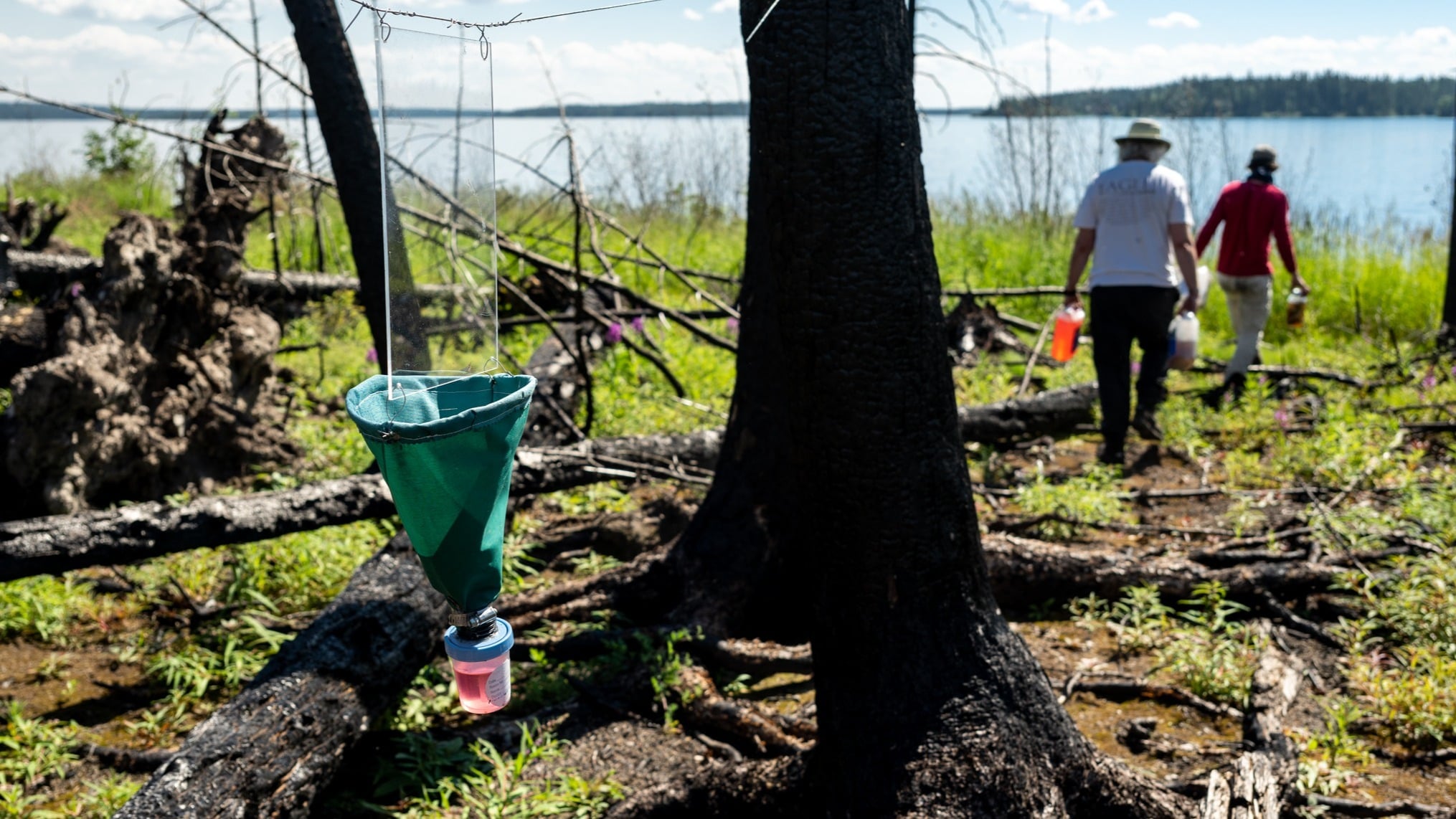
The project pulled together observations of more than 600 species on the islands, reconstructed fire history, and ultimately tested the ability of different conservation theories to explain the biodiversity patterns. (Image Credit: Submitted photo/b/w photo)
New Study

Wildfires play major role in boreal forest biodiversity: report

Apr 8, 2026 | 1:57 PM

With Canada aiming to protect 30 per cent of land and water by 2030, a new study shows the federal government should pursue a conservation method which takes wildfires into account.  

That’s according to La Ronge’s Aaron Bell, who recently had a research paper published by the Ecological Society of America on March 30 as part of his PhD in Biology. The project, which includes experiments on 42 islands in the Lac La Ronge region, focused on testing competing ideas on how government’s design protected areas such as nature reserves, or provincial and national parks.  

“When we set aside an area to manage for nature, for biodiversity, there’s kind of some conceptional frameworks for how to do that,” he explained.  

“Two of the most popular that are getting a lot of attention because of habitat loss and conversion of natural habitats like forests and things like that to agricultural to grow food, a lot of the ideas that kind of work in those landscapes don’t necessarily work in a landscape where fire is a really predominate feature.”  

Bell proposing government’s use a pyrodiversity-biodiversity method, which promotes and maintains diverse plants and fauna and thereby generating diversity. 

“I’m hoping it enables or empowers the people in the North to say we’re not managing fires at all for biodiversity and maybe this is something we should think about moving forward,” he said. 

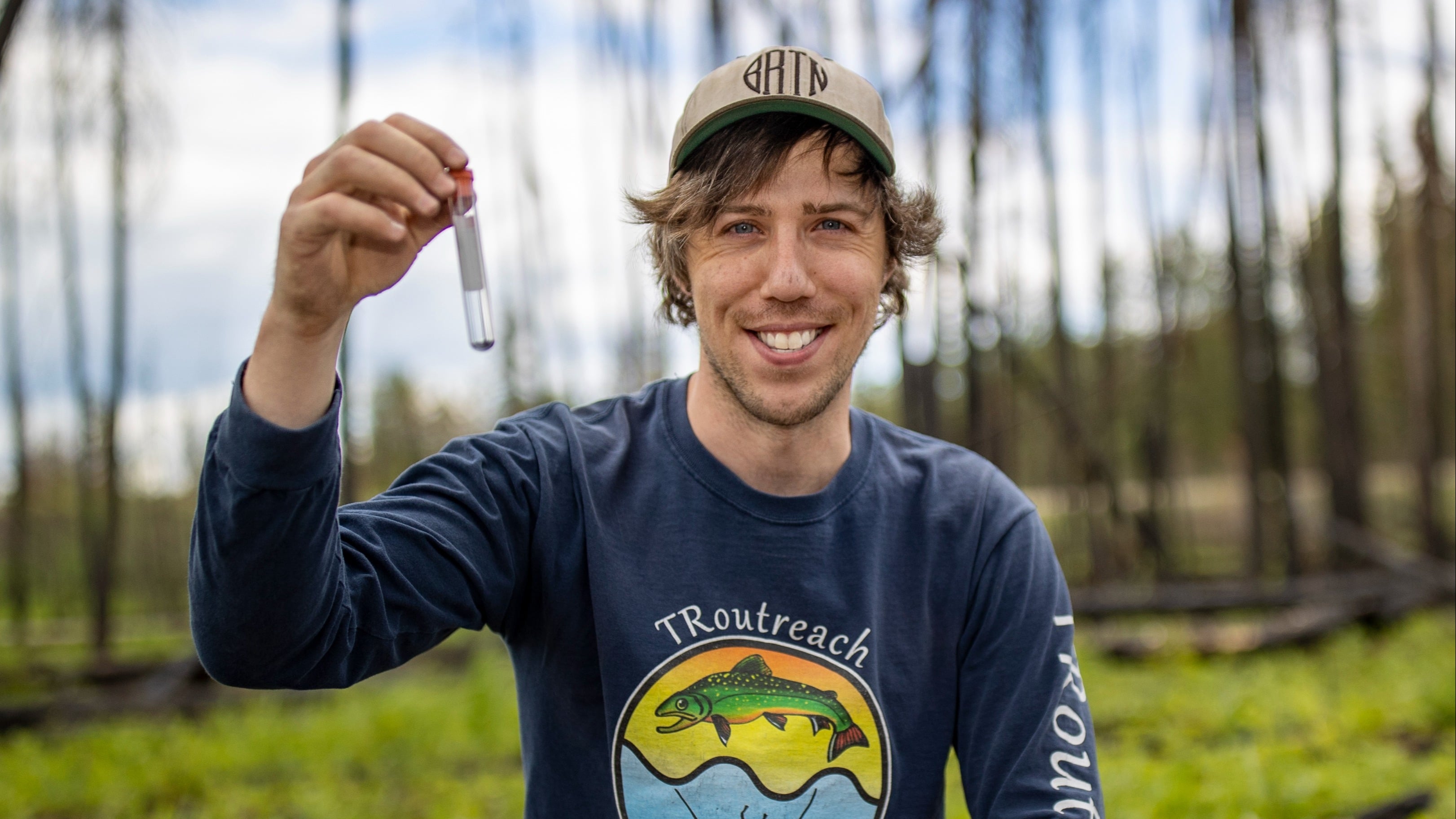
The report took Aaron Bell about eight years to complete.
The report took Aaron Bell about eight years to complete. (Image Credit: Submitted photo/James Villeneuve)
Two popular concepts that are at the forefront of how governments design protected areas were poorly supported by the data.
Two popular concepts that are at the forefront of how governments design protected areas were poorly supported by the data. (Image Credit: Submitted photo/b/w photo)

“Approaches that ignore routine disturbance or how the timing and spatial aspects of wildfires are changing are unlikely to be effective in conserving biodiversity in these forests.”   

For instance, other studies have found landscapes where fire was once a dominate feature but no longer is, the diversity in the ecosystem declines.  

“For example, in the forests of northern Canada, deer, mice, moose and black bear are found exploiting vegetation characteristic of early post-fire stages, while northern red-backed voles and caribou are more typically found in habitats characteristic of later post-fire stages of more than 50 years old,” an explanation on The Open University describes. 

“A landscape that includes both early post-fire stages and later stages of post-fire recovery therefore supports more species.”

Bell is hoping the research will be used by community leaders, First Nations, land users, academics and those responsible for wildfire legislation. His entire report can be found online here.  

derek.cornet@pattisonmedia.com