Click here to sign up for our free daily newsletter
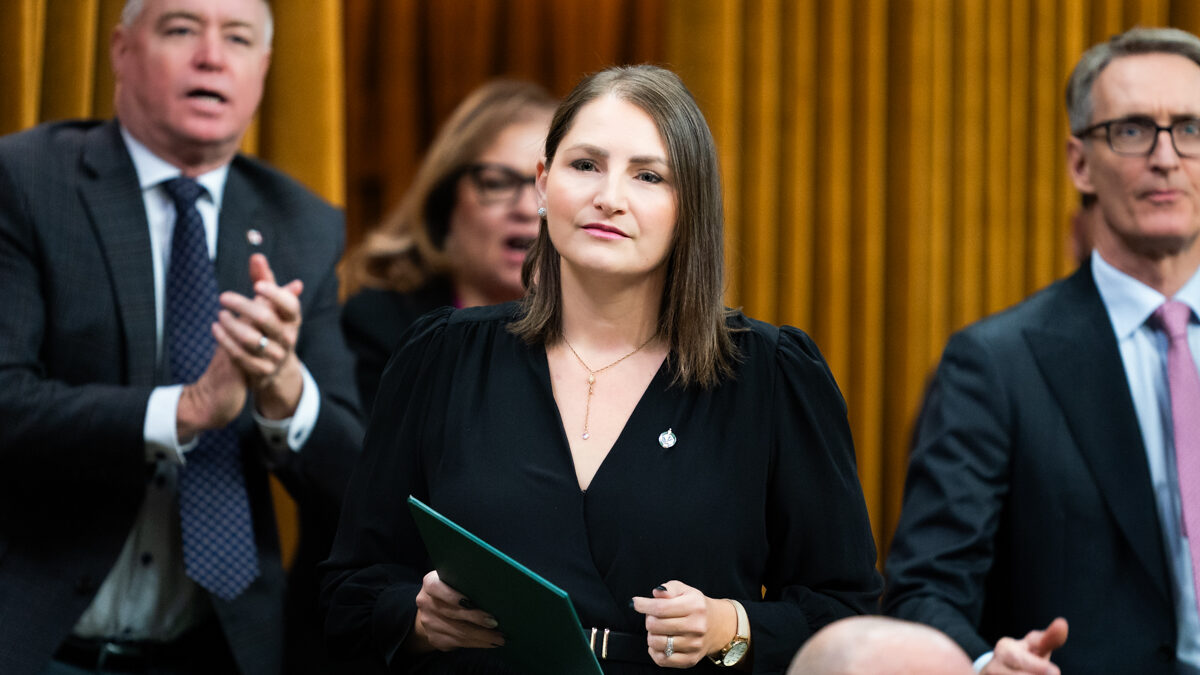
Battlefords—Lloydminster—Meadow Lake MP Rosemarie Falk speaks during a previous sitting in Ottawa. (Image Credit: Rosemarie Falk/website)
Bill s-209

‘Protecting kids’: Online porn age-check bill sponsored by MP Falk heads to Commons debate

Sep 18, 2026 | 12:50 PM

Online pornography providers could be required to verify that users are adults under a bill MP Rosemarie Falk said is scheduled for its first hour of House of Commons debate Sept. 24.

The Battlefords–Lloydminster–Meadow Lake MP is sponsoring Bill S-209, the Protecting Young Persons from Exposure to Pornography Act, in the Commons. The legislation was introduced in the Senate by Senator Julie Miville-Dechêne.

Falk said she took on the bill because children can currently access online pornography by simply indicating they are old enough.

“Ironically, porn companies aren’t doing it themselves, right? As it is right now, you just have to tick a box, so there actually is no verification process for age,” she said.

“At the end of the day, it comes down to protecting kids.”

The bill would make it an offence for an organization to provide pornographic material online to someone under 18 for commercial purposes.

An organization could defend itself against a charge by showing it had implemented a prescribed age-verification or age-estimation method restricting access to adults.

A first offence could carry a maximum fine of $250,000, while a subsequent offence could result in a fine of up to $500,000.

Falk compared the proposal with the age checks required when someone purchases alcohol, cannabis or cigarettes.

“What this bill would do would ensure that online porn companies would have to verify the age of the user,” she noted.

Falk argued federal action is needed because pornography companies are not adequately verifying users’ ages themselves. She said children are typically first exposed to pornography at about 10 or 11 years old. The material available to them “often depicts violence and degradation, particularly towards women.”

She said research has linked minors’ exposure to harmful sexual beliefs and behaviours. Falk said those concerns include the mistaken belief that women and girls are always sexually available, harmful attitudes about consent and increased rates of peer-to-peer sexual abuse among youth.

Falk called children’s exposure to online pornography “a public health and public safety concern.”

She discussed young people’s social-media use with parents and summer students while travelling during the summer. She also included questions about children’s access to social media and pornography in a constituency mailer she said was sent around mid-July.

“I had quite an astounding response,” Falk stated.

She did not provide a response total or a breakdown of the results during the interview but said the issue appeared to matter to constituents.

“A lot of people are actually surprised too that kids have such easy access to online pornographic content,” she said.

Exactly how a user’s age would be established has not been determined.

“It’s specific but not prescriptive. That’s probably the best way to put it,” Falk said.

She said the process could involve age verification using identification such as a driver’s licence or technology that estimates a user’s age. The permitted methods would be established later through federal regulations.

The bill requires any approved method to be highly effective and operated by a third-party organization at arm’s length from organizations commercially providing pornography.

It must also protect users’ privacy, limit the collection of personal information to what is strictly necessary and destroy information gathered for age verification or estimation once the process is completed.

“It also has to maintain user privacy and protect personal information,” Falk said.

The federal government could designate an enforcement authority to issue a non-compliance notice when it has reasonable grounds to believe an organization committed an offence.

The organization would have 20 days to take the required steps. If it failed to comply, the enforcement authority could apply to Federal Court for an order requiring internet service providers to prevent young people in Canada from accessing the material.

The bill provides a defence when material has a legitimate scientific, medical, educational or artistic purpose.

Falk said the Sept. 24 debate would be the first of two hours devoted to the bill. MPs would vote after the second hour on whether to send it to a House committee for further study.

“This isn’t the first time a bill like this has been brought forward,” she noted.

She said the proposal was still moving through Parliament when then-prime minister Justin Trudeau prorogued it, bringing the earlier effort to an end.

“This is just a continuation of the work that the previous Parliaments have already done.”

If the bill proceeds, Falk said any amendments or changes made during that process would return to the Commons for further debate.

Kenneth.Cheung@pattisonmedia.com