Click here to sign up for our free daily newsletter
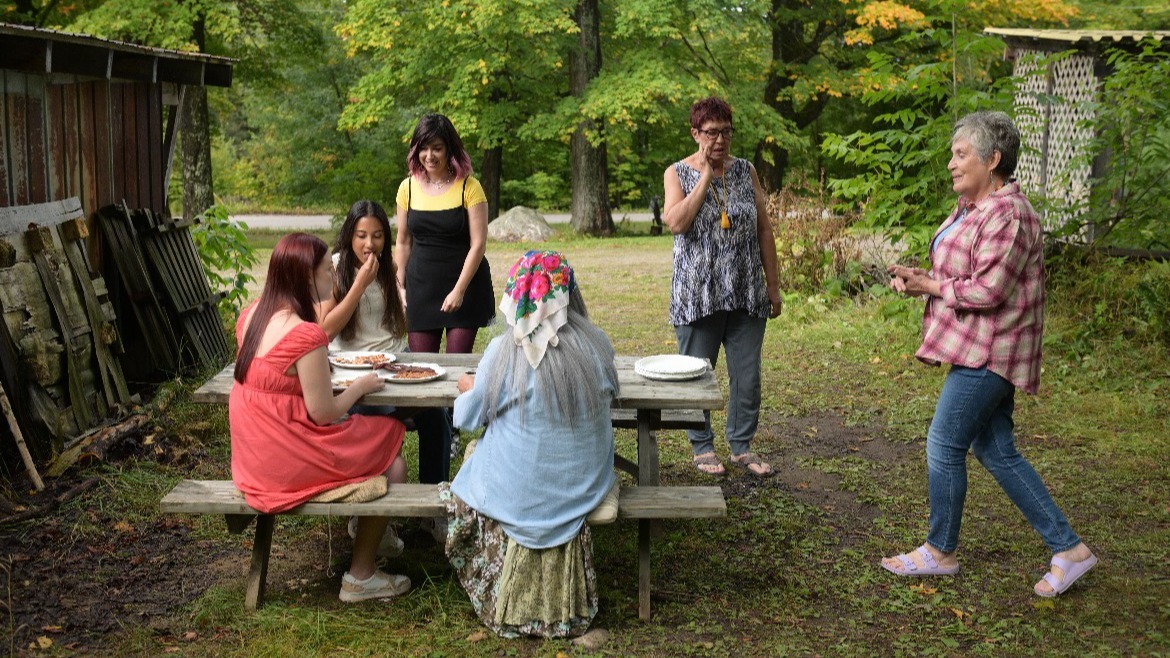
On the scene of Blood Lines - a new film that shares the message of culture, identity and love. (Image Credit: Art Agency Inc./ submitted)
IDENTITY AND CULTURE

Beauval roots inspire new Métis feature film

Sep 25, 2026 | 3:40 PM

“Is it the blood that flows through our veins, or is it the culture we were raised in and our chosen family?” Gail Maurice asked.

The award-winning Métis actor, director, writer and producer from Beauval, Sask., is the creator of Blood Lines, a new feature film exploring identity, culture and belonging.

“Blood Lines is about two women who fall in love, and while discovering identity and culture, it highlights Métis culture, Michif language, and it’s an homage to my Métis culture,” she said.

To bring that culture to the screen, Maurice looked east to North Bay, Ont., choosing a landscape that reminded her of growing up in northern Saskatchewan. That connection to home can be seen throughout the film, from traditional foods to the Northern Michif dialect, which is spoken in more than a third of the film.

Maurice also wanted the language and people on screen to reflect the community where she grew up.

“There’s only five villages that speak the Northern Michif dialect, which is Beauval, Green Lake, Buffalo Narrows, Île-à-la-Crosse and Jans Bay. So, I had to come home to audition people for three leading roles,” she said. “I wanted authentic representation of the language and the people and the culture.”

She ultimately cast her mother, Maggie Maurice, along with two other women from Beauval, Mary Burnouf and Bertha Durocher, who became known as the “Granny Gang.” Maurice also took on a lead role after struggling to find an actor who was fluent in Northern Michif and within the appropriate age range.

“As an actor, I’ve been asked to play different Indigenous roles and had to learn to speak Mohawk and different languages for film,” she said. “There’s nothing quite like acting when you actually know the language because you can’t teach an actor the mannerisms in the language and the culture.”

For Maurice, the film is also an opportunity to introduce audiences to a culture she says is often misunderstood or overlooked.

“I’ve lived in Toronto for 30 years and when I tell people that I’m Métis, you wouldn’t believe the amount of people that don’t know what that is,” she said.

Maurice said Blood Lines is the first narrative feature film to highlight Métis culture and language. Making the film has also helped build relationships within the industry.

“As an Indigenous filmmaker, you start to make connections with the global Indigenous filmmaking community, screenwriting community, and it’s just incredible how strong our bonds are and how similar our stories are,” she said.

Filming also gave Maurice the chance to be surrounded by Northern Michif speakers, something she rarely experiences while living in Toronto.

“It was more than making a film. It was actually being surrounded by my own people, which was a balm to my heart while I was making this film,” she said.

For the three elders in the “Granny Gang,” the experience was equally new; they had never worked on a film set. This set had more than 100 crew members, cameras and the demands of a feature production, but Maurice said they quickly adapted.

“They actually learned all their lines. They came, stood on their marks and they were very professional, very kind,” she said. “At the same time, they educated the crew members about our language and culture.”

After more than two decades of bringing the story to life, Maurice hopes audiences will take away one message:

“Be proud of our heritage and culture because we’re very unique and beautiful.”

—

Alyssa.rudolph@pattisonmedia.com