Click here to sign up for our free daily newsletter
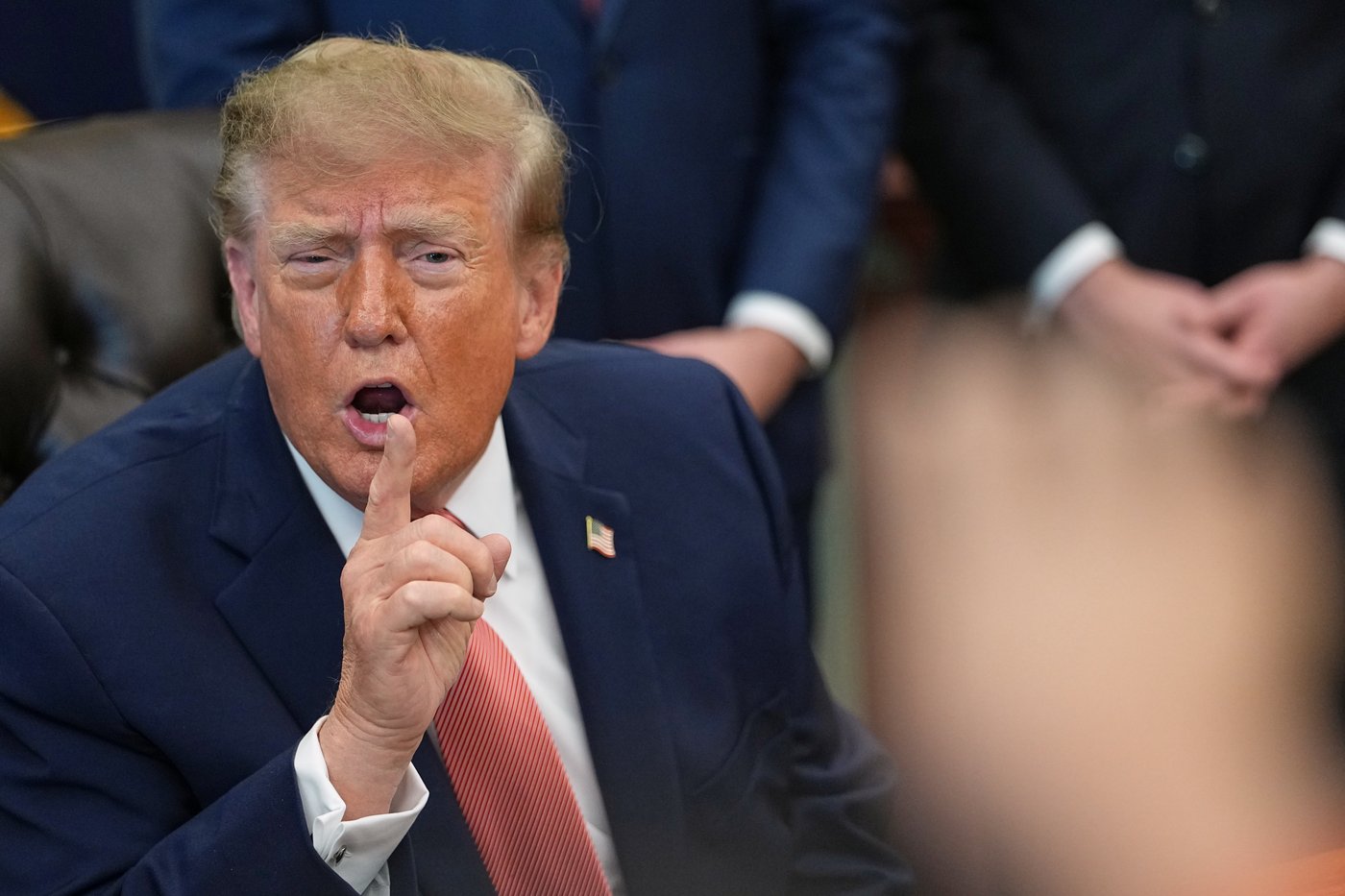
President Donald Trump speaks in the Oval Office of the White House on Tuesday, Oct. 20, 2026, in Washington. (AP Photo/Jacquelyn Martin)

New lawsuit filed challenging Trump’s tariffs on Canada

Oct 20, 2026 | 1:21 PM

A U.S. food importer has filed a lawsuit in the United States Court of International Trade challenging U.S. President Donald Trump’s tariffs targeting Canada.

The lawsuit, filed Tuesday by the non-profit Liberty Justice Center on behalf of Gellert Global Group in the New York-based court, argued Trump’s use of a Depression-era trade statute exceeds his power as president.

“No president should have the power to pull a dormant statute off the shelf and use it to impose sweeping tariffs or import bans without the limits Congress required,” Liberty Justice Center CEO Sara Albrecht said in a news release.

Trump used Section 338 of the Tariff Act of 1930 to slap an array of Canadian goods with a 50 per cent levy after trade talks broke down in August.

The same statute was used the following month to ban the import of other Canadian goods, including motorcycles and some alcohol and dairy products.

The White House has said Section 338 empowers the president to impose tariffs when a country puts U.S. exporters at a disadvantage relative to exporters in other countries — even though the law has never been used for that purpose.

U.S. officials have said the latest duties are a response to provincial bans on U.S. liquor, Canada’s supply managed dairy system and quotas on certain U.S. vehicles.

Tuesday’s lawsuit said the Canadian policies don’t justify the sweeping tariffs imposed by the Trump administration.

It notes two of the measures — auto quotas and liquor bans — were actually a response to Trump’s own tariff measures. The lawsuit also said Canada’s dairy supply management involves policies agreed to under the Canada-U.S.-Mexico Agreement on trade, known as CUSMA, which was negotiated during the first Trump administration.

The White House has not yet responded to a request for comment.

Thomas Gellert, co-chief executive officer of Gellert Global Group, said the company has “spent generations building trusted relationships with suppliers, customers and partners across the food industry.”

“These tariffs disrupt those relationships overnight and create costs and uncertainty that ripple through the entire supply chain,” Gellert said in the news release.

The case raises concerns beyond Canada, the news release said. If the duties remain unchecked, any president could use Section 338 to impose tariffs and trade restrictions without meaningful congressional control.

The Liberty Justice Center was previously involved in the legal challenge against Trump’s use of the International Economic Emergency Powers Act of 1977 for the so-called “Liberation Day” and fentanyl-related tariffs on Canada, Mexico and China.

In February, America’s top court concluded it was not legal for Trump to use the statute, known as IEEPA, because the U.S. Constitution very clearly gives Congress power over taxes and tariffs.

This report by The Canadian Press was first published Oct. 20, 2026.

Kelly Geraldine Malone, The Canadian Press