Click here to sign up for our free daily newsletter
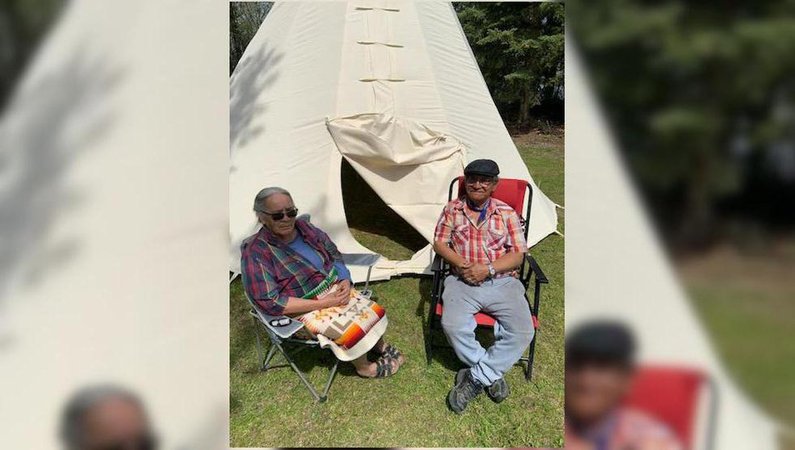
A.J. Felix and his wife will celebrate their 54th wedding anniversary next week. (Submitted photo/A.J. Felix)
The road to recovery

Sask. First Nation Elder says increased funding and resources needed to help families recover from residential school experience

Jun 1, 2021 | 5:00 PM

An Elder from Sturgeon Lake First Nation west of Prince Albert says he was not surprised when he heard the tragic and horrific news that the remains of 215 children were found at a residential school site in the Kamloops area.

A.J. Felix, 75, attended residential schools at Duck Lake (St. Michael’s) and Lebret.

“I lived in a residential school for 13 years and I know how we were treated and I knew how children went missing from our school,” he said. “They disappeared.”

Felix recalled one specific personal story. He explained every morning children were ushered outside, while one of the school staff cleaned the play room/dining room area.

On one particular fall day, Felix, maybe 10 at the time, came across another young boy in the yard who was exhibiting signs of freezing and when touched, was “burning up.” When Felix attempted to knock on the door for help, he received no response, but knowing the severity of the situation, chose to break the rules and ran along the outside of the building until he found a door that was open. He then proceeded to go upstairs to the principal’s office to ask for help.

“Ten minutes later, I was called on the loud speaker. I was told to come to the door and they let me in and what did they meet with was a strap. I got a lickin’ for doing that and I never saw that little boy ever again,” he said. ‘He probably died.”

Felix guessed he was probably six or seven when he was initially taken from his home, and loaded onto a livestock truck that had a roof and big windows.

“I remember climbing up onto this truck and I remember watching my mom crying”, he said. “I was crying too. I didn’t want to leave.”

Felix also recalled his parents being assured their children would be well looked after by their new moms and dads—the nuns and priests. The priest also told Felix’s dad that if his children did not come to the residential school, he would go to jail.

“The very next morning, when I met up with my ‘new mom’, she was trying to tell me something and I couldn’t understand because I didn’t understand a word of English, so she slapped me. This was my new mom,” Felix said.

(Nigel Maxwell/paNOW Staff)

Nearly six decades later, Felix considers himself lucky and despite the trauma he was exposed to, says with the help of the church and counseling, he was able to “grow out of it.” He also explained he does not hold any ill will towards the church, and to this day continues to attend Catholic services. He has also baptized his own nine children.

“It wasn’t God who did that to us. God was always there for us,” he said.

Feliz also credited his upbringing in a traditional family as a strong source of support, although recognizing his experience at the residential school had an impact on his own abilities to parent and be a good husband. He said the children at the school were not taught about child rearing counseling; how to treat a lady, or even relationships.

“It just seemed like everybody was getting prepared to be a priest or a nun,” he said.

The next chapter

Felix said there’s been a lot of talk about reconciliation, but does not think anything has actually been done to address healing or counseling.

“What is being done on reconciliation? Is it one sided or two sided? We have not had the funding to follow up on the calls for action,” he said.

Pointing to the thousands of children in Saskatchewan currently in foster care, Felix fears the cycle will repeat itself unless better supports are in place to help the next generation of mothers and fathers. He said families are living in poverty and turning to drugs and alcohol as a means to cope.

“And who comes right along, the social services department with their apprehension police and the children are taken. The young people are not given a chance,” he said. “Our young people are committing suicide. What else can they do?”

nigel.maxwell@pattisonmedia.com

On Twitter: @nigelmaxwell