Click here to sign up for our free daily newsletter
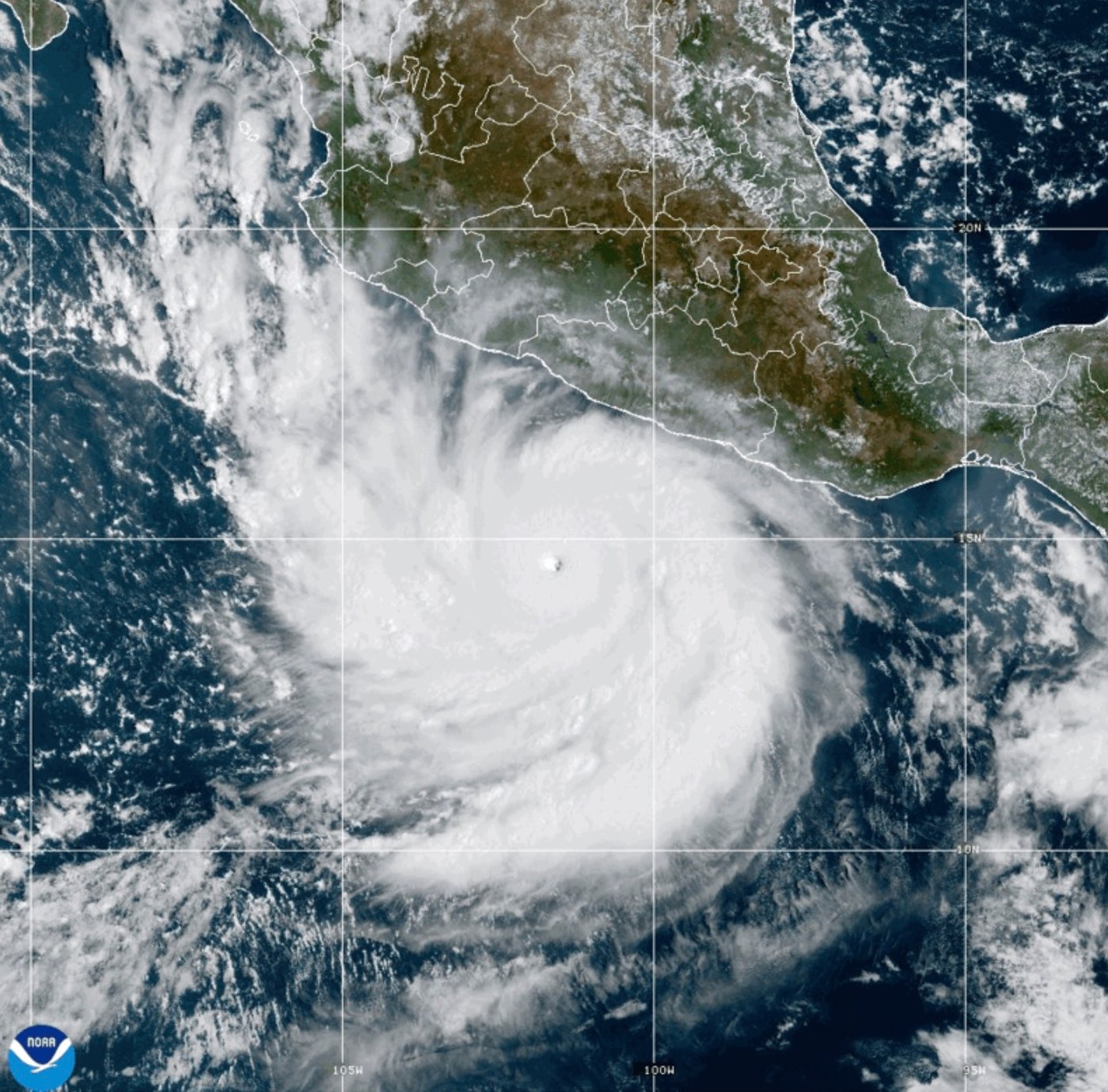
This photo provided by NOAA shows Hurricane Polo strengthening in the Pacific Ocean off the coast of Mexico on Tuesday, Sept. 22, 2026. (NOAA via AP)

Hurricane Polo fuels fears of landslides and flooding in Mexico’s southwest

Sep 23, 2026 | 4:06 AM

MEXICO CITY (AP) — Southwestern Mexico braced for coastal flooding and mudslides Wednesday after Polo, a powerful Pacific cyclone, became a major hurricane. Forecasters also warned that Hawaii could face another onslaught of harsh weather later in the week.

Hurricane Polo, an “extremely dangerous” storm, is expected to skirt Mexico’s Guerrero state, submerging coastal areas with 4 to 6 inches (10 to 15 centimeters) of rain through Thursday, according to the National Hurricane Center in Miami. Guerrero has been repeatedly pummeled by hurricanes in recent years.

Polo, which was swirling a couple of hundred miles off the coast Wednesday afternoon, was not expected to make landfall, meteorologists and Mexican President Claudia Sheinbaum said. Rain and strong winds had already started to pummel the coast, with waves crashing onto the normally pristine beaches.

Tropical storm conditions including torrential rain and extraordinary wind were also expected along the Pacific coast of Michoacan and Colima states through Thursday.

At its peak, Polo was a Category 5 hurricane with maximum sustained winds of 180 mph (290 kph). It was a Category 4 by Wednesday afternoon, but still packing sustained winds of up to 145 mph (230 kph).

“Fluctuations in intensity are expected, but Polo is expected to remain a very powerful major hurricane during the next few days,” the hurricane center said.

Waves, flooding and mudslides are all risks

Concepción López Villegas was busily bolstering her seaside restaurant in Lázaro Cárdenas, Michoacán, against the expected onslaught of rain. Strong waves were already hitting some beaches and López Villegas said she feared the storm could destroy the small business she worked decades to build.

“We’re worried and trying to protect our businesses,” López Villegas said. “And of course, we’re sad because it’s our heritage, our legacy that from one moment to another could be destroyed.”

The hurricane center warned that Polo’s deluge could cause life-threatening flooding and mudslides, in particular in Guerrero.

The region most under threat from the hurricane is rural and mountainous, scattered with a few small tourist towns and ports. Much of the area is marked by poverty and residents routinely complain authorities abandon them to fend for themselves during natural disasters.

Mexico’s government has called for evacuations in some areas and set up shelters for those affected. Thousands of military and Red Cross personnel have been deployed to the region as a preventative measure.

El Nino fueled Polo’s growth

Philip Klotzbach, research scientist in the Department of Atmospheric Science at Colorado State University, attributed Polo’s rapid intensification to the weather phenomenon known as El Nino, which has fueled crippling droughts in Mexico and Central America and floods elsewhere.

In the Pacific, it has resulted in warmer waters and wind patterns that act as fodder for hurricanes, he said.

“There are all the ingredients that hurricanes need to get really strong really fast,” Klotzbach said.

Another hurricane could hit Hawaii as soon as Friday

The National Weather Service said Wednesday afternoon that Tropical Storm Nolo was forming 310 miles (500 kilometers) south-southwest of Big Island in Hawaii with sustained winds of 40 mph (65 kph).

The weather service warned it become a hurricane by Thursday.

The hurricane center advised the island chain to monitor the system, which was projected to drop 15 to 20 inches (38 to 51 centimeters) of rain on Big Island, raising the possibility of flooding and mudslides.

The center of the cyclone was expected to close in on the islands by Friday or Saturday.

While wind and rain were mainly expected on Maui and Big Island, Kauai’s electric cooperative urged residents to prepare for “the possibility of prolonged power outages,” and to store non-perishable food and potable water.

Over 100 Kauai households remain without power from Hurricane Lowell, which passed west of the island on Sept. 7.

Hawaiian Electric, the state’s primary utility, said crews would return to at-risk areas to help residents prepare for the coming storm.

Odalys strengthens into a hurricane

Hurricane Odalys, also in the Pacific, strengthened on Wednesday, carrying maximum sustained winds of 75 mph (120 kph). It churned about 1,265 miles (2,040 kilometers) west-southwest of the southern tip of Mexico’s Baja California peninsula and was not at risk of making landfall, according to the hurricane center.

An advisory said Odalys could increase in strength over the next couple of days but would likely weaken by the end of the week.

___

Brooks reported from Atlanta. Associated Press reporter Gabriela Aoun in San Diego contributed.

Megan Janetsky And Desiree Brooks, The Associated Press