Click here to sign up for our free daily newsletter
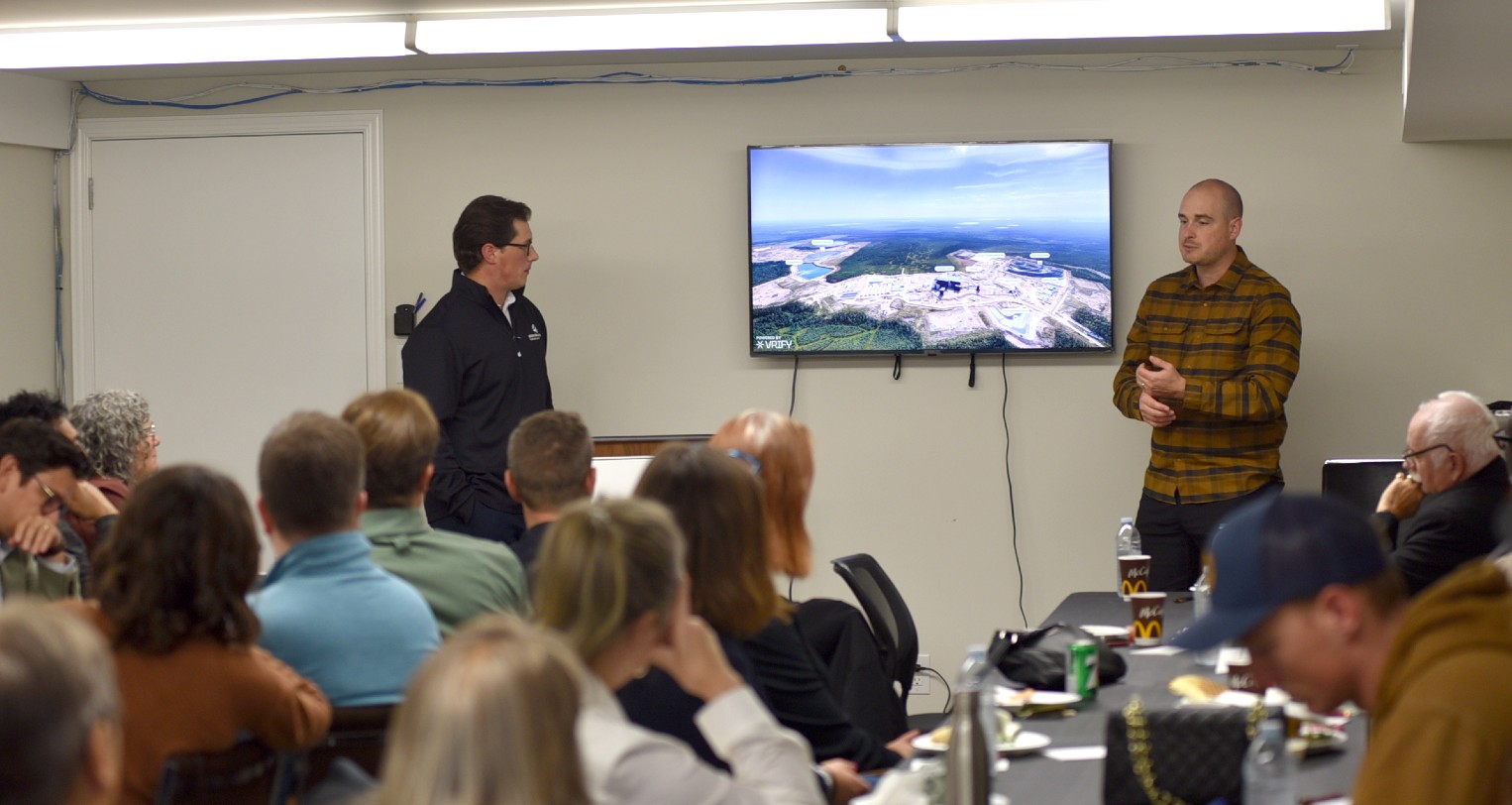
Carter Zazula, left, and Anthony Brockbank of El Dorado Gold gave an update on the McIlvenna Bay copper and zinc mine near Creighton. (Image Credit: Susan McNeil/paNOW)
McIlvenna Bay

El Dorado looks to more than double northern Sask. mine output

Sep 15, 2026 | 4:36 PM

A newly minted copper and zinc mine near Creighton that has not yet reached full production is already looking to double in size.

El Dorado Gold, which bought Foran Mining earlier this year, is in the process of test drilling at a site dubbed Tesla, next to McIlvenna Bay.

During a luncheon hosted by the Prince Albert and District Chamber of Commerce on Tuesday, Carter Zazula, government relations lead for El Dorado’s Saskatchewan operations, said it is exciting to see the progress being made.

“We cashed our first cheque and, when we received that payment from Glencore, where it was smelted, our accounting department didn’t know how to process it because we’ve just been investing and dumping money into this project,” he said.

“And now, being with the project for five years, it’s a darn good feeling to see those trucks moving and to see all the people at site.”

The first copper concentrate from McIlvenna Bay was shipped in June, followed the next month by the first shipment of zinc concentrate. The mine is El Dorado’s first foray outside gold mining, which it conducts in Türkiye, Greece and Quebec. The company also maintains corporate offices in Vancouver and Amsterdam, the Netherlands.

Significant funds from El Dorado’s existing operations are being invested in ramping up McIlvenna Bay and exploring the adjacent Tesla deposit.

“We’ve invested millions more into exploration this year for our land package. We’ve also started technical studies on an expansion to 7,000 tonnes per day from the original 4,900-tonne-per-day plant, as well as a study on an additional silver and lead circuit,” Zazula said.

Getting a green light for Tesla would double the life of the operation from the currently anticipated 18 years.

“Once we have that resource estimate, that’s what you use to do your feasibility study. And that’s how you figure out how to mine and when to mine that asset. So there’s a lot of good news coming.”

Zazula shared a digital presentation showing the mine operations from above, including multiple buildings and bunkhouses for workers, who mainly work two weeks on and two weeks off unless they live in the nearby communities of Creighton or Denare Beach.

Zazula said demand for workers at the mine is significant. Many are bused in on company vehicles from Saskatoon, with a stop in Prince Albert to pick up additional workers before travelling north on Hanson Lake Road (Highway 106) to the site.

At the peak of construction, the site employed about 1,100 workers but will maintain a commercial production workforce of around 450 people working in two shifts. More workers will be needed if Tesla also moves ahead.

In negotiations with Peter Ballantyne Cree Nation and Cumberland House Cree Nation, the company made several commitments related to environmental sustainability and renewable energy.

One was building an underground mine rather than an open-pit mine. Another was reducing the use of fossil fuels at the site.

“One of the big things we like to highlight is that we have an all-battery-electric vehicle fleet. We were one of the first companies in Canada to do that.”

Power comes from the Island Falls and Sandy Bay hydroelectric stations.

“We pay a bit of a premium, but again, that’s a conscious choice in order for us to minimize some of our greenhouse gas emissions and be able to say that it is renewable energy.”

Heat is supplied by trucked-in liquefied natural gas.

The tailings pond is filtered, and the company has Canada’s first evaporator system for a water containment pond, with four units operating at the site.

“They allow us to manage the amount of water we have by evaporating what’s safe to do so.”

Zazula said the mine begins 30 metres below the surface and extends to a depth of 1,080 metres.

“That’s just McIlvenna Bay. We think Tesla is deeper, so there’s a lot of work to do.”

McIlvenna Bay drew Canada-wide attention when Prime Minister Mark Carney named it one of the first initiatives under the newly-created Major Projects Office.

Despite the fact that the project was already underway when it was listed, Zazula said the designation has made a difference.

“A big piece of that folks don’t realize is that we were already talking to the government about the development of Tesla. So this next deposit, we’ve known about it for years.”

Being on the Major Projects Office list could allow the company to be permitted provincially rather than federally, a process that typically takes much longer.

“As soon as you get into the Impact Assessment Act, you can increase your timeline by years. The province, meanwhile, has been regulating mines for a century with people from P.A., Regina and Saskatoon versus 25 officials in Ottawa who have no idea what Flin Flon is or where it is.”

From a financial perspective, when investors saw Ottawa getting serious about development, being named one of the first five projects provided a significant boost, Zazula said.

susan.mcneil@pattisonmedia.com